
Makeup Artist Applying Permanent Makeup On A Model With Dark Skin In A Beauty Studio
Pmu For Darker Skin Pigment Amp Technique

PMU for Darker Skin: Expert Pigment Selection and Techniques for Melanin-Rich Skin

Pmu For Darker Skin Pigment Amp Technique

Permanent makeup (PMU) has become a popular choice for enhancing natural beauty, especially for individuals with darker skin tones. This article delves into the nuances of pigment selection and application techniques tailored specifically for melanin-rich skin. Readers will learn about the best pigments, the safest techniques, and how to avoid common pitfalls such as hyperpigmentation. Understanding these aspects is crucial for achieving beautiful, long-lasting results. We will explore the importance of color theory, the top pigment brands, and specialized PMU services that cater to darker skin tones. By the end of this guide, you will be equipped with the knowledge to make informed decisions about PMU for darker skin.

Key Takeaways

  • Choosing pigments that complement your unique undertones ensures a natural, lasting look.
  • Microshading is often the safest and most effective technique for darker, oily skin types.
  • Proper pigment implantation depth and technique are vital to prevent uneven fading and scarring.
  • Following thoughtful aftercare supports healing and maintains pigment vibrancy.
  • Specialized PMU services can tailor treatments like lip blush and eyeliner to enhance deeper skin tones beautifully.

Indeed, understanding the distinct cosmetic concerns prevalent in darker skin tones is fundamental to providing effective and tailored permanent makeup services.

Unique Cosmetic Concerns for Darker Skin Tones

Cosmetic concerns of those with darker skin differ from those of white patients. These differences are often attributed to racial variance in skin pathophysiology. White patients seek cosmetic procedures most commonly for rhytides, actinic damage, and telangiectasias, whereas patients with darker skin are more concerned with pigmentary disorders, scarring, and hair disorders.

Cosmetic considerations and nonlaser cosmetic procedures in ethnic skin, 2003

Which pigments work best for permanent makeup on dark skin?

Variety Of Pigment Containers For Permanent Makeup Suitable For Dark Skin Tones

Getting the right pigments is key if you want your permanent makeup to look fresh and natural on darker skin. The best pigments harmonize with your skin’s undertones—whether warm or cool. If you have warm undertones, shades with golden or reddish hues usually look incredible. For cool undertones, ashier pigments often do the trick. It’s all about color theory, which is a fancy way of understanding how colors work together to highlight your natural beauty.

How does color theory guide pigment choice for melanin-rich skin?

Color theory really helps us pick the right pigments for darker skin. Think of the color wheel like a helpful map: complementary colors can cancel out unwanted tones or enhance what’s natural. So, if you have warm undertones, a touch of cooler pigment might balance everything perfectly. We also look at the Fitzpatrick scale, which tells us how your skin reacts to sun exposure, so we choose pigment depth and shades that stand the test of time. That said, it’s not a one-size-fits-all—your unique skin tone and condition always come first.

What are the top pigment brands and modifiers for darker skin tones?

There are some standout pigment brands that are trusted for working beautifully on darker skin tones. Here’s a quick look at a few favorites:

Pigment BrandTypeBest Use
PermablendOrganic-basedNatural-looking results on dark skin
Tina DaviesVeganRich color saturation
BiotouchWater-basedEasy application and blending

These brands offer colors specifically formulated to complement melanin-rich skin, so you get results that not only look stunning but also last.

And if you’re looking for expert care, services like Permanent Makeup by Rosie Wells offer specialized cosmetic tattoo options crafted with darker skin tones in mind.

What are the safest and most effective PMU techniques for ethnic skin?
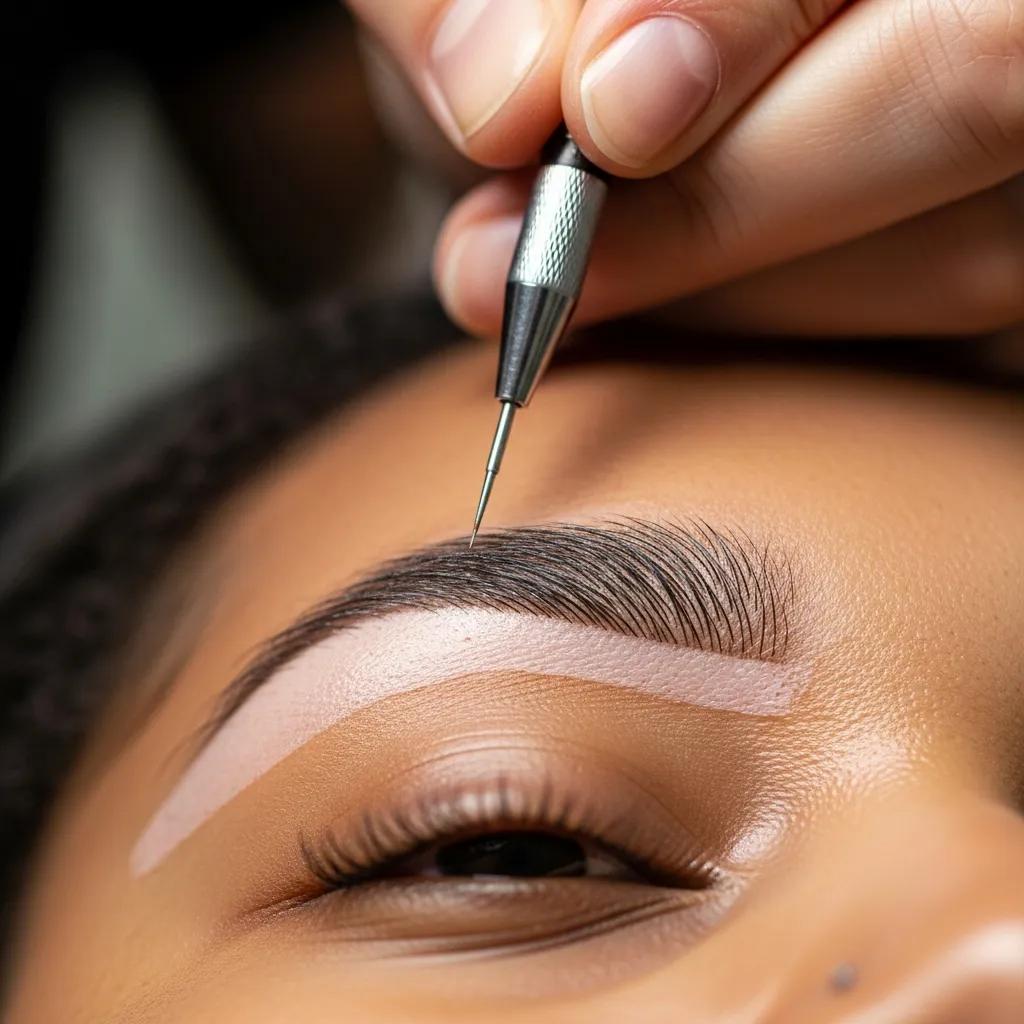
Close Up Of Microshading Technique Being Applied On Dark Skin

When it comes to permanent makeup for ethnic skin, choosing the right technique matters a lot. Microshading often wins out over microblading for darker, oily skin types. It gives a softer, more diffused look that fades more evenly over time, which is exactly what you want.

Why is microshading preferred over microblading for darker, oily skin?

Microshading tends to work better on darker, oily skin because it mimics the natural look and reduces the risk of patchy fading. The process uses a small machine to place pigment, giving the artist better control over how deep and strong the pigment goes. That control is super important—too shallow and the pigment might fade fast, too deep and it could scar. With microblading, oily skin can sometimes cause the pigment to blur or fade faster, which isn’t ideal.

How do implantation depth and pressure affect pigment retention on dark skin?

Getting the pigment depth and pressure just right is essential for lasting results on darker skin. Too shallow, and the color disappears quickly; too deep, and you might get scarring or discoloration. Skilled artists adjust these factors based on your skin’s unique texture and type to make sure your PMU looks amazing for the long haul.

How can hyperpigmentation and scarring be avoided in PMU for darker skin?

Hyperpigmentation and scarring are definitely concerns when getting PMU if you have darker skin. But with the right approach and aftercare, you can avoid these issues and enjoy gorgeous, even results.

What aftercare practices support healing and pigment longevity on melanin-rich skin?

Taking good care of your skin after PMU is key to healing well and keeping your pigment vibrant. Here’s what we recommend:

  1. Avoid sun exposure: Keeping UV rays off the area helps prevent fading and discoloration.
  2. Keep the area clean: Gentle cleansing helps prevent infection and lets your skin heal smoothly.
  3. Moisturize: Using an artist-recommended ointment keeps skin hydrated and supports recovery.

Stick to these steps, and you’ll give your pigment the best chance to stay true and your skin the best chance to heal beautifully.

How are corrections handled for hyperpigmentation or pigment issues?

If any hyperpigmentation or pigment problems come up, don’t worry — there are ways to fix them. Some of the most common methods include:

  1. Color correction: Using pigments to balance out unwanted tones.
  2. Laser treatments: In serious cases, lasers can lighten or remove pigment, but we approach these with caution on darker skin to avoid more pigmentation issues.
  3. Touch-ups: Regular touch-ups keep your look fresh and patch-free.

Knowing these options helps you feel confident that your PMU journey will lead to the best possible outcome.

Recent insights highlight just how important personalized care is when managing hyperpigmentation in melanin-rich skin. It’s all about understanding your unique needs.

Managing Hyperpigmentation in Skin of Color

Hyperpigmentation disorders, such as post-inflammatory hyperpigmentation and melasma, are common conditions affecting all skin types. These conditions are largely benign and are influenced by numerous endogenous and exogenous factors impacting melanocyte activity and melanin production. Current treatment modalities for these conditions fall into broad categories, including photoprotection, topical and systemic therapies, chemical peels, and laser or light-based therapies. Biological differences in skin of colour require additional consideration when deciding on treatment and management. This narrative review provides an inclusive summary of these conditions and compares the current treatment options with a specific focus on skin of colour.Dermatology: how to manage facial hyperpigmentation in skin of colour, 2022

What specialized PMU services are tailored for darker skin tones?

There are PMU services crafted just for darker skin — designed to bring out your natural beauty while addressing what makes your skin unique.

How is lip blush customized for deep skin tones?

Lip blush for deeper skin tones is all about picking colors that feel like an enhanced version of your natural lips. Warm, rich shades are favorites because they make lips pop without looking harsh. This way, your lips look fuller and more vibrant but still totally you.

What considerations are there for permanent eyeliner on melanin-rich skin?

When applying permanent eyeliner on darker skin, we take extra care to match pigments with your skin’s undertones and desired look. Techniques like tightlining or soft shading provide subtle definition that lasts and feels natural. Plus, knowing how your skin heals and how pigments fade helps us plan treatments that keep you looking your best longer.

Conclusion

Choosing permanent makeup for darker skin isn’t just about looking good — it’s about feeling confident in the way your natural beauty shines through. By picking the right pigments, trusting expert techniques like microshading, and following thoughtful aftercare, you’re setting yourself up for stunning, long-lasting results. Remember, your skin is unique, and your PMU should be too.

If you’re ready to take the next step toward a flawless, worry-free permanent makeup experience designed specifically for melanin-rich skin, don’t wait. Book a consultation with a skilled PMU artist who truly understands your needs and can help create a look that’s all yours.

Ready to enhance your natural beauty?

Contact us today to schedule your personalized PMU consultation and discover the perfect pigment and technique for your skin tone.

FAQ: PMU for Darker Skin

Permanent Makeup By Rosie Wells
Privacy Overview

This website uses cookies so that we can provide you with the best user experience possible. Cookie information is stored in your browser and performs functions such as recognising you when you return to our website and helping our team to understand which sections of the website you find most interesting and useful.